
The Empty Shelf
Written for National Hygiene Week 2026
Sometimes, the simplest things tell the biggest stories.
A tube of toothpaste. A bottle of shampoo. A bar of soap.
Things most of us wouldn’t think twice about buying, but for someone experiencing hygiene poverty, they can mean the difference between taking part in everyday life and withdrawing from it.
When The Hygiene Bank asked me to write something for National Hygiene Week 2026, I knew I wanted to explore what happens when those everyday essentials simply aren’t there.
This poem is personal.
There was a time when I had to choose between putting food on the table and buying the things we needed to keep ourselves clean. My friend and fellow Hygiene Bank volunteer, Debbie, remembers having to make one bar of soap do the job of several different products.
Those experiences stayed with us.
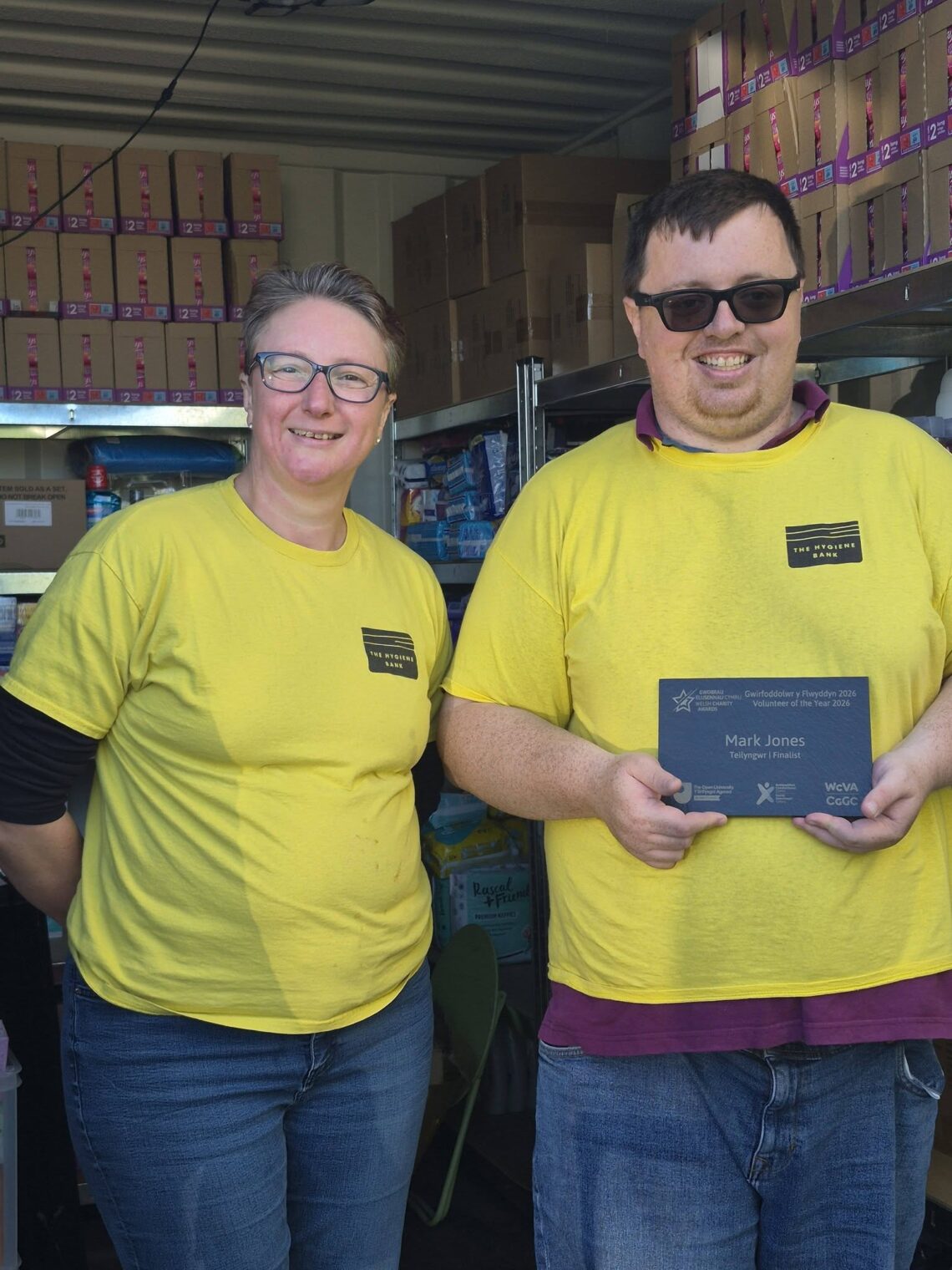
Today, through our volunteering with The Hygiene Bank in North Wales, we’re helping other people who face those same choices.
The Empty Shelf is about the things we don’t see, the choices nobody should have to make, and the difference that one small act of kindness can make.
The Empty Shelf
There is an empty shelf
in a bathroom.
Nothing unusual.
A space where shampoo should be.
A toothpaste tube
rolled, squeezed, flattened,
trying to get
one more brush out of it.
Shower gel
turned upside down.
And a bar of soap.
For your hands.
Your body.
Your hair.
Everything.
Because that’s what you’ve got.
So that’s what you use.
An empty shelf.
Except—
an empty bathroom shelf
doesn’t stay in the bathroom.
It follows you.
Down the stairs.
Out of the door.
Onto the bus.
You sit down
and wonder
if the person next to you
has noticed.
It follows you into school.
Into the classroom.
You choose the empty chair
with nobody sitting
too close.
It follows you to work.
Someone leans in.
You lean away.
It follows you
to the invitation
you turn down.
The photograph
you step out of.
The conversation
you keep your distance from.
The job interview
you nearly don’t go to.
Nobody else
can see the shelf.
They just see you.
Quiet.
Distant.
Maybe rude.
They don’t see
what followed you
out of the bathroom.
Then you’re standing
in a supermarket.
Bread in one hand.
Toothpaste in the other.
You need both.
You can take one.
Bread.
Toothpaste.
Eat.
Brush.
You shouldn’t have
to choose.
But you do.
The toothpaste
goes back.
Somewhere else,
someone picks up
a tube of toothpaste.
They don’t know you.
They don’t know
about the bus.
Or the empty chair.
Or the invitation.
Or the interview.
They just know
somebody needs it.
So they give it.
It goes into a box.
Then another.
It passes through hands.
Until one day,
it reaches yours.
Tonight,
there is toothpaste
on the shelf.
That’s it.
One tube of toothpaste.
It won’t change your life.
That’s not the point.
It means tonight
you can brush your teeth.
And tomorrow—
the shelf stays home.
You get on the bus.
Without it.
You sit in the classroom.
Without it.
You go to work.
Without it.
You walk into that interview.
Without it.
Someone leans in.
This time,
you don’t lean away.
Ten years ago
we were telling stories
about people having to choose
between essentials.
We’re still telling them.
There are still
empty bathroom shelves.
This story
should have ended
by now.
It hasn’t.
One tube of toothpaste
won’t end hygiene poverty.
Neither will
one bottle of shampoo.
Or one bar of soap.
But somebody gives one.
Somebody else gives another.
And tonight,
somewhere,
there is one less
empty shelf.
About the poem
The Empty Shelf was written for National Hygiene Week 2026 and published by The Hygiene Bank as part of its campaign to raise awareness of hygiene poverty.
When I shared the poem with The Hygiene Bank’s Central Team, I wasn’t expecting quite the reaction it received.
Rosemary Ashworth, the charity’s Deputy CEO, told me that it beautifully captured what The Hygiene Bank does and why. Sue, our Partnership Manager, subsequently informed me that I’d left the Central Team with rather leaky eyes!
But perhaps the reaction that meant the most came from Debbie, who recognised her own experiences in the words.
For me, that’s why I write.
Not simply to tell a story, but to help people recognise the experiences that too often go unseen.
I’m grateful to The Hygiene Bank for embracing this poem and helping its message reach people across the UK.
Read The Empty Shelf — The Hygiene Bank’s official publication (PDF)
To find out more about hygiene poverty, or how you can help, visit The Hygiene Bank.


